 As is usual, I find myself sitting in front of a computer in the late evening. This evening is, of course, different than most. It is January 1, 2010, the first day of a new year, and the first day of a new decade. (In reality it is January 2, 2010, because it’s after midnight, but in my world the day doesn’t change until I go to sleep, which is often well after midnight.)
With an empty beer bottle in front of me, I find myself thinking back on the year that ended, and the highlights and lowlights it brought me…
- Not changing jobs in the course of a calendar year for the first time since 2004.
It’s hard to believe to most people, but it is true: 2009 was the first time in the past five years that I didn’t change jobs during the calendar year. As of today, I have been employed by the same company for 13 months. With 14 jobs in the past 18 years, averaging one year and three months per job, if past history repeats itself, I will be expected to change jobs this year. As they say in the financial world, past history is not a predictor of future results… but we’ll see what happens. - A new addition to the family: Jessica Emma DeMarzo!
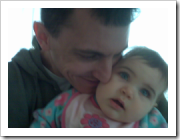 Born on February 20, 2009, Jessica is absolutely adorable, with the biggest cheeks on a baby that I’ve ever seen, and with blue eyes that are nothing short of astounding. For nearly four years, my older daughter, Alyssa, was our only child; in an instant, when Jessie arrived, everything changed. To experience again the wonderful experience of bringing a baby into the world, and to add to that the experience of seeing your own daughter become a sister (and a big sister at that) is nothing short of heart-stopping. Having had one child for quite some time, and now having two, I can tell you this: if you have the means and the opportunity, don’t have just one child, if not for yourself or your spouse, but for your children. It’s a lot of work, but the rewards are immeasurable.
 - Realizing the limits of what I can do.
Sometime back when I was in my early 20s, my mother warned me of burning the candle at both ends. I’ve burned the candle at both ends ever since, and the burning has only gotten more intense as I’ve gotten older, with more demanding jobs and a family to care for. For the first time, I can honestly say that I think I’ve reached the limit of what I can do. Maybe it’s me getting older, maybe it’s the increasing demands that life puts on me, maybe it’s the increasing demands that I put on myself. Reaching the limit doesn’t mean I am going to stop pushing myself; instead, I’ll put a greater emphasis on prioritizing and focusing my energy most effectively, and I’ll take more time for myself every now and then to recharge the batteries.
The funny thing about reaching the limit of what you can do is that it doesn’t stop you from doing more. My plans for 2010:
- Put the band back together. I’ve been an on-and-off musician throughout my adult life, and have been largely out of the music thing for nearly a decade. No longer; I’ve picked up the guitar and started tickling the ivories once again, and plan to be in a band that is ready to play gigs by the end of the year. I also plan on resuming the classical guitar lessons that I abandoned 17 years ago.
- Finish rewriting CSFBL — really! For nearly four years I’ve been talking about and working (on-again, off-again) on rewriting my baseball game, CSFBL. It’s time to get it done, and this year, one way or another, it’s going to happen. I have some traction and a game plan, so for the first time, I can go into a new year with a feeling that the end of the rewrite journey is within my grasp. For the sake of the thousands of people who have stuck with the game for all these years, I had better deliver!
- Getting involved in local politics. Those that know me personally know that this has been something in the back of my head for a long time. Late in 2009, I hooked up with some folks of the Libertarian Party, and I’m in the process of working with them to start a chapter in my home town. I’m still not convinced this is my final political resting place; though I am more Libertarian than Republican, I also have concerns about the limitations of a third political party in a two-party system. Still, I will be at the first meeting of the Staten Island Libertarian Party on January 6, 2010, and we’ll see where it takes us. Who knows, maybe one day you’ll see my name on a voting ballot? (I’d hope you’d consider voting for me!)
- Clearing up the book back-log. I just got a Kindle, so I really have to start getting through the pile of books waiting to be read. If necessary I will cut out reading some magazines, at least temporarily. I’m sure the folks at Discover or Scientific American will understand, so long as it is temporary.
This is all very interesting to me, but who else cares? What does Joe Average care about my New Year retrospectives? Why do I write on this blog, anyway?
Everything I’ve written in this blog has a target audience.
- The tech articles are intended for the tech audience, in hope that I spare them some of the pain that I’ve experienced.
- The opinion articles are intended to give people a perspective which, hopefully, they feel is thoughtful and worthy of consideration.
- The personal articles are written in part for my friends and family (though few actually read them)… but mostly for my children. I hope that some day they can read this and learn things about their father that I forgot to tell them, or that I had forgotten altogether.
In the end, this blog is the best legacy I have to my children. It is about me, what I’ve experienced in life, what I’ve learned; this blog is here for me to share the many different sides of me, the “Sides of DeMarzo”… and anyone who knows a little Spanish will know that “de marzo” translates to “of march” – hence, the “sides of march.”
So thanks to all those who have the patience to sit through my maximum verbosity. I hope you learn something about yourself through my experiences. In any event, a happy, healthy, and prosperous new year to all, and to all a good night!
 sides of march (Brian DeMarzo)
Leave a comment